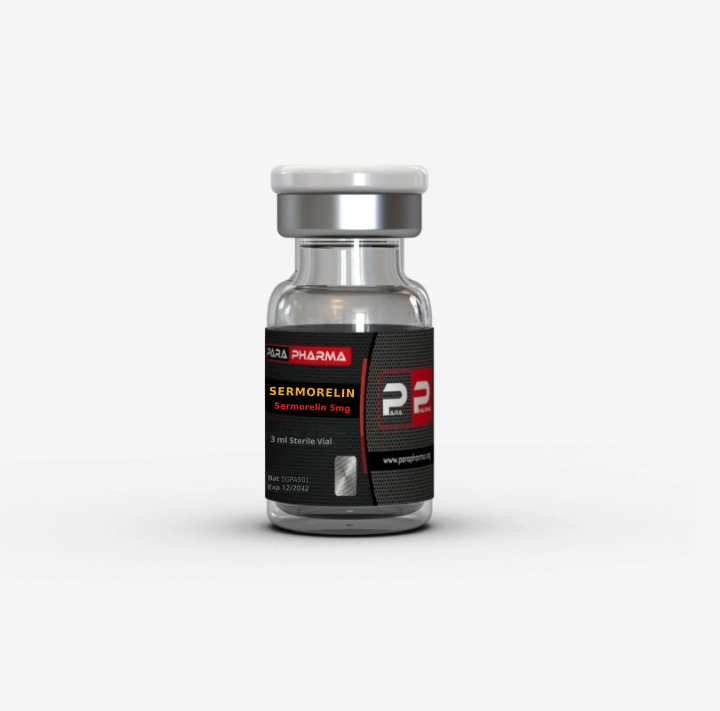
- Name
- Sermorelin
- API
- Sermorelin
- Dosage5mg
- Packing3 ml vial
Sermorelin is a biologically active analog of growth hormone–releasing hormone (GHRH), a peptide made in the brain that triggers the pituitary gland to produce and release growth hormone. By acting this way, sermorelin stimulates the body’s own natural production of human growth hormone (HGH) rather than supplying HGH directly. It is a shortened (truncated) form of the native growth hormone–releasing factor (GRF 1‑44) that normally signals the pituitary to synthesize and secrete HGH. In younger individuals, the brain produces ample GHRH, allowing the pituitary to release enough growth hormone to support normal health, vitality, and bodily form and function. As people age, GHRH output falls, which leads to a decline in pituitary HGH production and secretion and contributes to the typical consequences of growth hormone deficiency. Compared with directly administered HGH, sermorelin acts earlier in the growth hormone neuroendocrine pathway, more closely mimicking normal physiology, and is associated with a more favorable safety profile and fewer regulatory limitations for use in adult hormone deficiency. Although sermorelin can produce similar changes in body composition and many of the same benefits attributed to HGH, it also offers additional advantages. Because its effects are controlled at the pituitary level through normal negative feedback mechanisms and somatostatin release, the risks linked to excessive HGH exposure are greatly reduced or avoided. Growth hormone released from the pituitary in response to sermorelin follows a pulsatile, episodic pattern rather than a constant “square‑wave” exposure, which helps prevent tachyphylaxis (diminished response) and better reproduces normal physiology. By stimulating the pituitary rather than bypassing it, sermorelin helps preserve function in the growth hormone neuroendocrine axis, which is typically the first part of this system to fail with aging.
